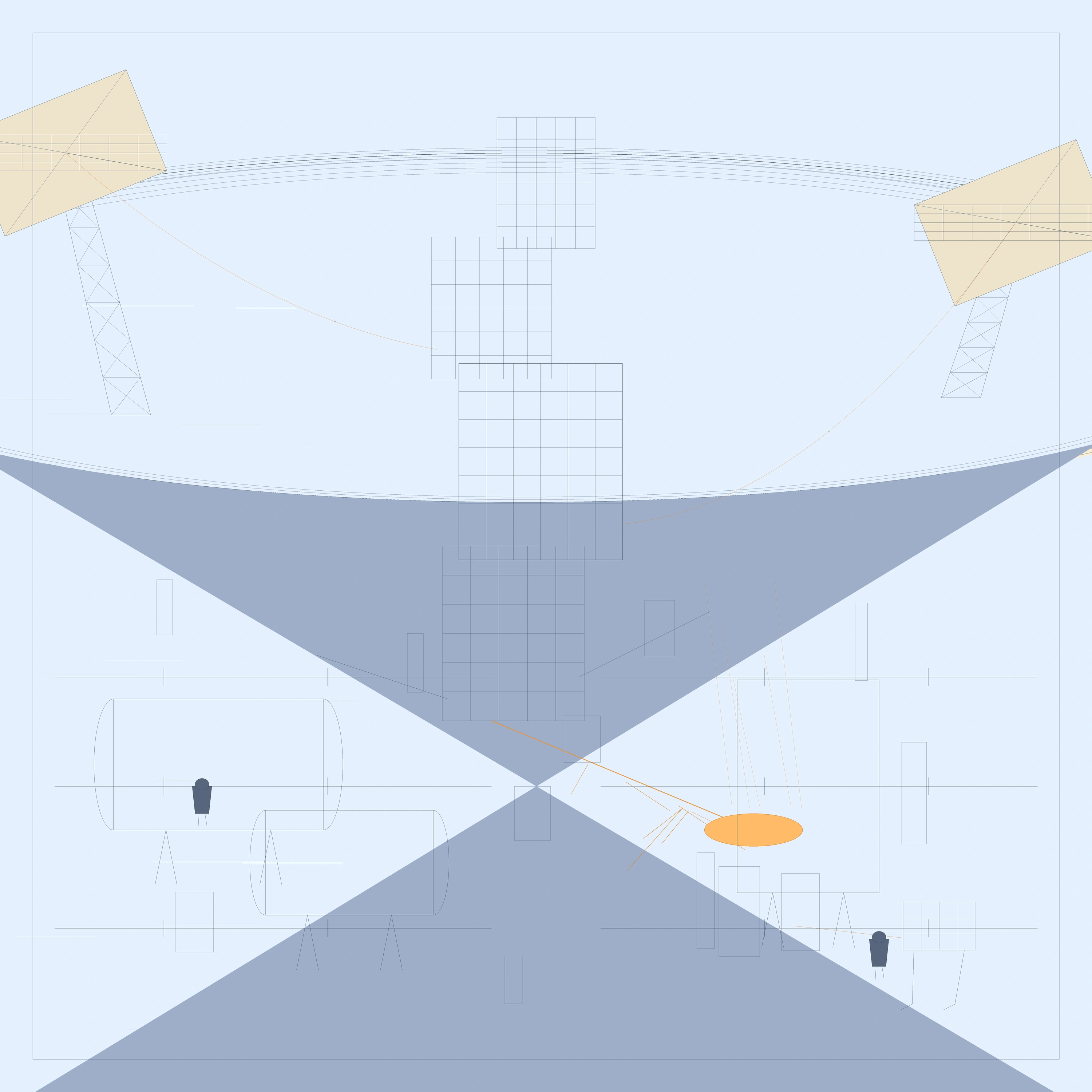
The pole keeps the ice in shadow; power cracks it, and the crack travels as steam and light across the cold floor.
An artistic imagining, not real hardware: a solar-powered ice-cracking plant in the permanent shadow of a lunar south-pole crater, drawn as a precise technical diagram. Power runs down from sun-tracking masts on the rim to a central electrolyzer stack, where a warm crack shows water ice being split into propellant, and the resulting cryogenic tanks feed a small lander waiting to be refilled. NASA's LCROSS mission detected water ice in Cabeus crater, but no such plant exists.Image: poweringspace.com. Artistic imagining.